Jawline definition
Three things decide whether a jaw reads sharp. You control two of them, and the popular methods mostly target the one you do not.
Jaw definition is bone shape, the fat sitting over it, and how much fluid you are holding. Bone is fixed after growth. Fat and fluid are not, and between them they account for most of the difference between a defined jaw and an undefined one on the same skeleton.
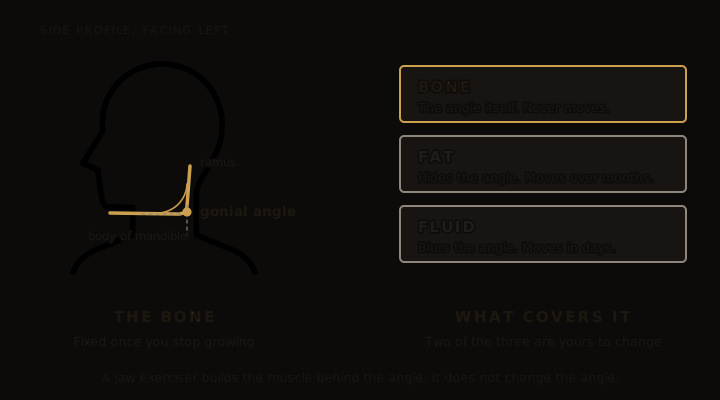
The three layers
| Layer | What it does | Can you change it |
|---|---|---|
| Bone | Sets the gonial angle, the chin projection and the width of the jaw. This is the shape a defined jaw reveals. | No, not without surgery |
| Fat | Sits under the chin and along the jaw, softening the line between face and neck. | Yes, slowly |
| Fluid | Puffiness that blurs the same line, day to day. | Yes, in days |
Almost every real before and after in this area is fat and fluid. The bone was always there.
What actually works
Body fat, the big one
Lowering overall body fat is the only thing that reliably reveals a jaw, and it cannot be targeted. Spot reduction is not a thing, so exercises aimed at the chin do not remove fat from the chin.
The face is usually a late responder. Expect the waist to move first and the jaw weeks after that, which is exactly the point at which most people conclude it is not working and stop.
Fluid, the fast one
Sodium, alcohol and short sleep all show up as facial puffiness, and the jaw line is where it is most visible. This is why the same face can look sharp one morning and soft the next on identical body fat.
It is also the only lever here that works in days rather than months, so it is worth taking seriously before assuming the problem is structural.
Posture, the quiet one
Head carried forward shortens the visible distance between chin and neck and softens the whole line. Bringing the head back over the shoulders changes the profile immediately, costs nothing, and does not require anything to have changed physically.
What does not work
- Jaw exercisers and hard chewing gum. They develop the masseter, the muscle at the back of the jaw, which widens the face slightly at that point. They do nothing to the angle of the bone and nothing to the fat under the chin. Overdeveloping it can also cause jaw pain, which is a poor trade for a change nobody will notice.
- Mewing, as a jaw sharpener. Resting the tongue on the palate is fine and costs nothing. The claims about it reshaping an adult jaw are not supported, and the timescales quoted for it are not a thing anybody has measured.
- Face massage and rollers, beyond fluid. They shift fluid temporarily, which is a real if short lived effect, and they do not touch fat or bone.
- Skin creams. No cream reaches a fat pad.
The one thing worth checking first
Before deciding your jaw is the problem, look at the photo you judged it from. A camera above eye level narrows the jaw and hides the area under the chin, and a camera below widens it. Half the people who conclude they have no jawline are looking at a selfie taken from below.
Take the photo properly and judge from that instead.
How Forma reports it
Jawline is one of the five main scores, and it reads from both photos: the front for the line itself, the side profile for jaw angle and chin projection. That second photo is why Forma asks for a true side profile rather than a three quarter angle, which hides exactly those two things.
Jaw is also weighted as one of the more improvable features in the plan, precisely because two of its three layers respond to effort. Symmetry, by contrast, is weighted low. The plan is built to point at whatever is both weak and movable rather than whatever is simply lowest.
Common questions
- Does chewing gum or a jaw exerciser give you a better jawline?
- It develops the masseter, the chewing muscle at the back of the jaw. That widens the face slightly at that point. It does nothing to the jaw's bone angle and nothing to the fat under the chin, which is what most people actually mean when they say their jawline is undefined.
- How much body fat do you need to lose to see your jaw?
- There is no single number, because where you store fat is individual and largely genetic. The face is usually one of the later places to change, so expect the jaw to sharpen after the waist has already moved, not before.
- Can you change your jaw angle without surgery?
- No. The gonial angle is bone, set once growth finishes. Everything non surgical works on what sits over the bone: fat, fluid and muscle. That is often enough to change how the jaw reads, but the bone itself does not move.
On Android? Get it on Google Play
Forma is a self improvement tool, not a medical or diagnostic service. Nothing here is medical or nutritional advice, and jaw pain is a matter for a dentist or doctor rather than an app.
Related guides
- How to take the photoCamera height changes a jaw more than most routines do.
- Facial thirds and fifthsThe lower third is the band body fat moves the most.
- Facial symmetryChewing side preference is a real cause of an uneven jaw.
- Face shapeThe jaw decides half of these classifications.
- Chin projectionConstantly confused with jaw width, and a different bone.
- Buccal fat and hollow cheeksThe pad above the jaw that ignores your diet.