Cheekbones
High and wide are two different things, and people asking for one usually mean the other. One of them you can reveal, the other you were born with.
High describes where the cheekbone sits vertically, roughly level with the outer corner of the eye. Wide describes the distance across your face between them. Fat loss reveals whatever bone is there and then stops working entirely, because the bone is the ceiling.
The cheekbone is the zygomatic bone, and it does two visible jobs. It sets the widest point of the upper face, and it creates the highlight and shadow that the eye reads as structure. Almost every complaint about flat or missing cheekbones is really about one of those two things, and they have completely different answers.
Finding yours
Put a finger just in front of the top of your ear and press gently, then trace forward and slightly down toward the outer corner of your eye. You are following the arch of the zygomatic bone. The point where it feels most prominent and starts to turn back toward your nose is the one being described as high or low.
- Level with, or just under, the outer corner of the eye: reads as high.
- Noticeably lower, nearer the level of the nostrils: reads as low or flat.
Do this by touch rather than by looking. What you see in a mirror is the fat over the bone plus whatever the light is doing, and that is exactly what you are trying to see past.
Width, and the ratios it feeds
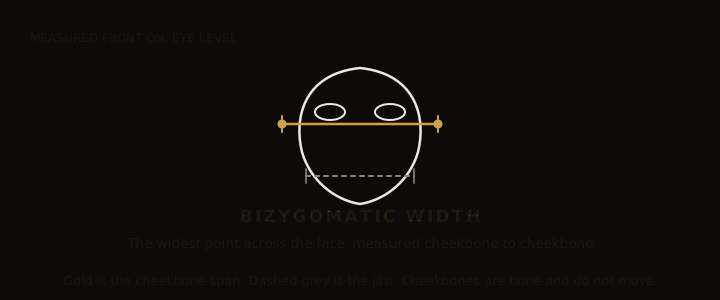
Bizygomatic width is the distance across the face at its widest cheekbone point. On its own the number means nothing, because a bigger head has a bigger everything. It matters as the reference for two comparisons:
| Comparison | What it describes |
|---|---|
| Cheekbone width against jaw width | How much the face tapers from the mid face down to the jaw. A strong taper reads as a defined, angular face. Very little taper reads as square or heavy, which is often fat rather than bone. |
| Facial width to height ratio | Cheekbone width compared to the height of the mid face. A well studied measurement, frequently over interpreted online, and one of the more reliably genetic numbers on your face. |
| Cheekbone width against the five vertical columns | Where the cheekbones fall relative to the facial fifths, which is what makes a face read as balanced across rather than merely wide. |
What you can actually change
Three layers sit between the bone and the outside world, and only some of them move.
Body fat. This is the one that matters. The cheek carries a fat pad, and reducing overall body fat thins it. For most people this is the single largest available change to how defined their face looks, and it is why the same person can look like they gained cheekbones after losing weight. Nothing was gained. Something was uncovered.
Fluid. Sodium, alcohol and sleep move the cheek visibly within a day or two, in the same way they move the jawline and the under eye area. This is why your face looks sharper some mornings for no lasting reason.
The bone. Fixed. No exercise, massage, technique or device changes it. Anything sold on the promise of building cheekbones is selling you the fat loss you would have got anyway, or nothing.
The point where it stops working
This is worth stating plainly, because the topic attracts a particular kind of advice.
Fat loss reveals bone until the fat over the bone is gone. After that, more loss does not produce more cheekbone. What it produces is a hollow, tired looking face, thinner temples and a generally unwell appearance, because you have started taking fat from places that were doing structural work. The bone underneath is the ceiling, and it arrived at the ceiling without your permission.
If you are lean and your cheekbones still do not show, that is your anatomy rather than a failure of effort, and continuing to cut is the wrong response to that information. It is also the point where this stops being a cosmetic question.
Light does more than anything
Cheekbones are visually a highlight with a shadow under it. That means the same face reads as sculpted or flat depending entirely on where the light is.
- Creates them: light from above and slightly to the side, a window at an angle, overcast daylight outdoors.
- Erases them: flat frontal light, a ring light, a phone flash, and most indoor ceiling lighting.
If you want a genuine read rather than a flattering one, use the setup in how to take the photo, and use the same setup every time so two scans are comparable.
How Forma reports it
Cheekbones feed the bone structure score, and they sit next to the mid face and jaw measurements rather than standing alone, because the taper between them is what the eye actually reads. Where a scan finds definition limited by fat rather than bone, that lands in the plan as a body composition task with a real timescale attached. Where it finds the bone itself is the limit, it says so and gives you no task, which is the honest output even though it is the less satisfying one.
Common questions
- What are high cheekbones?
- High refers to where the widest, most forward point of the cheekbone sits vertically. If that point sits level with or just below the outer corner of the eye, the cheekbones read as high. If it sits noticeably lower, closer to the level of the nostrils, they read as low or flat. It is about position, not about how wide your face is.
- Can you get cheekbones by losing fat?
- Losing body fat reveals whatever bone is there, and for many people that is the single biggest visible change available. But the bone is a ceiling. Once the fat over the cheek is gone, further loss does not produce more cheekbone, it just makes the rest of the face look drawn. If you have reached that point and still do not see them, the shape is anatomy.
- What is bizygomatic width?
- The distance across the face at its widest point between the two cheekbones. It is used as the reference width for several facial ratios, including the comparison against jaw width and the facial width to height ratio. It is a bone measurement and does not change with weight.
- Why do my cheekbones look different in photos?
- Lighting does most of it. Cheekbones are read as a highlight on top and a shadow underneath, so light from above and in front creates them and flat, direct light erases them. Camera distance matters too: a close phone camera enlarges the nose and flattens the cheeks, while a photo from further back with zoom shows the real proportions.
On Android? Get it on Google Play
Forma is a self improvement tool, not a medical or diagnostic service. Nothing here is medical advice or dietary advice. If thinking about your face is driving how much you eat, that is worth talking to a doctor about rather than an app.
Related guides
- Jawline definitionThe other half of the taper, and the same three layers.
- Buccal fat and hollow cheeksThe pad below the cheekbone, and why removing it is not reversible.
- Midface ratioThe height your cheekbone width is measured against.