Midface ratio
The distance from your eyes to your top lip, measured against the width of one eye. One of the strongest signals in a face and one of the least changeable things on it.
Divide the pupil to lip distance by your eye width. Around one is the usual reference. Lower reads as a short, compact midface, higher reads as long. It is bone, it is fixed after your early twenties, and camera height fakes it more convincingly than almost any other measurement.
The midface is the region between the eyes and the mouth: the area carrying the nose, the cheeks and the upper jaw. Most people have never measured it and can still tell you instantly that something about a face reads long or compact. This is usually what they are reacting to.
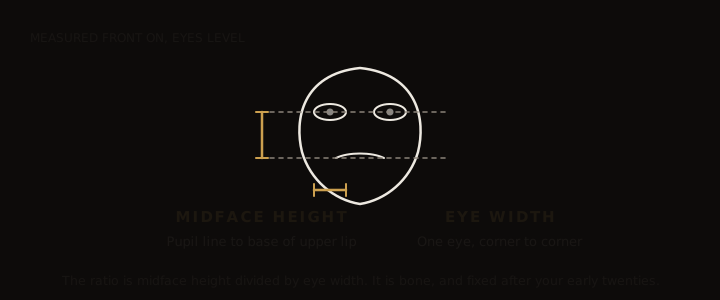
The measurement
Use a straight on photo taken at eye level with a neutral expression. Both numbers must come from the same photo, because the whole thing is a ratio and mixing sources produces nonsense.
- Midface height: from the centre of the pupils straight down to the top edge of the upper lip.
- Eye width: from the inner corner to the outer corner of one eye.
Divide the first by the second. The reason eye width is the yardstick rather than centimetres is that eye width is relatively consistent across faces of very different sizes, which makes it a usable internal ruler. It is the same logic behind the five vertical columns in facial thirds and fifths.
What short and long actually change
A shorter midface compresses the distance between the eyes and the mouth. It reads as compact and tends to read younger, partly because the midface lengthens slowly throughout life. It also brings the features closer together, which is read as more concentrated.
A longer midface spreads those features apart. It reads as more mature and, on faces where the lower third is also long, can make the whole face read as vertically stretched. It is extremely common and it is not a defect.
Neither is a verdict, because this measurement does almost nothing alone. A short midface above a long lower third produces a very different face from a short midface above a balanced one. This is the recurring problem with single facial numbers, and it is the reason a scan that gives you one measurement and a grade is giving you less than it appears to.
Why nothing moves it
The distance is set by the maxilla and the bones around it. Those finish growing in the late teens or early twenties, and after that the number is what it is.
Two categories of claim exist around this and both are worth ignoring. Devices and exercises sold to shorten the midface do not work, because no soft tissue intervention shortens bone. Techniques claiming to change facial bone position in adults through posture or tongue placement have not been shown to alter this measurement, whatever else is argued about them.
What genuinely changes is how long the midface appears:
| Lever | Effect |
|---|---|
| Camera height | The big one. A phone above eye level stretches the midface dramatically. This single factor explains most cases of the midface looking different between two photos. |
| Head tilt | Chin down lengthens the apparent midface, chin slightly up shortens it. Same face, different number. |
| Cheek fullness | Fuller cheeks visually fill the area and shorten the read. Hollow cheeks lengthen it. See buccal fat. |
| Brow and hair | Framing changes where the eye thinks the face begins, which shifts the apparent proportions above the measurement. |
The first two are the reason to take your photo properly before drawing conclusions. The setup is in how to take the photo, and for this measurement it matters more than for any other.
How Forma reports it
Midface ratio feeds the proportions read alongside the thirds and fifths, and the scan flags it as structural. That flag is the point. Because this measurement is bone, the plan will not generate a task against it no matter how far from the reference it sits. A tool that handed you an exercise for your midface would be selling you something, and the number is more useful to you as context for the measurements around it than as a target.
Common questions
- How do you measure midface ratio?
- Measure from the centre of the pupils down to the top of the upper lip, then measure the width of one eye from inner corner to outer corner. Divide the first by the second. Somewhere around one is commonly used as the reference: noticeably below reads as a short midface, noticeably above reads as long. Both numbers must come from the same straight on photo at eye level or the ratio is meaningless.
- Is a short midface better?
- A shorter midface tends to read as more compact and is associated with a youthful look, because the midface lengthens gradually through life. That is a tendency rather than a verdict, and it interacts with everything around it. A short midface on a long lower third reads completely differently from a short midface on a balanced one.
- Can you shorten your midface?
- No. The distance is set by the maxilla and the surrounding facial bones, which finish growing in the late teens or early twenties. Nothing non surgical changes it. What changes is how long it appears: camera height, head tilt and the fullness of the cheeks over it all shift the read without shifting the measurement.
On Android? Get it on Google Play
Forma is a self improvement tool, not a medical or diagnostic service. Nothing here is medical advice.
Related guides
- Facial thirds and fifthsThe bands and columns this measurement sits between.
- CheekbonesThe width this height is compared against.
- How to take the photoCamera height distorts this more than any other measurement.