Skin texture, pores and clarity
Every other guide here ends with some version of it is bone, you cannot change it. This one does not, which is why it is the most useful page on the site.
Skin is the highest return feature on your face because it is the one that genuinely responds. Pore size is fixed but pore visibility is not. Everything real happens on a timescale of months, and a small routine done daily beats a large one done occasionally.
If you have read the other guides, you will have noticed a pattern. Cheekbones, brow ridge, midface, chin, nose: bone, bone, bone, bone, bone. That honesty is the point, but it can leave the impression that nothing is worth doing.
Skin is the answer to that. It is one of the strongest drivers of how a face reads, it is noticed immediately and unconsciously, and unlike everything else on the list it moves.
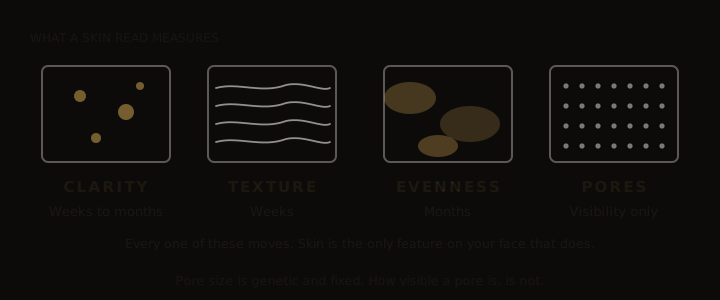
The four things being measured
| Measure | What it is | Moves? |
|---|---|---|
| Clarity | Presence of active breakouts, marks and blemishes. | Yes, weeks to months |
| Texture | Surface smoothness. Roughness, flaking, bumpiness that catches the light. | Yes, weeks |
| Evenness | Consistency of tone. Redness, patches, and marks left behind after old breakouts. | Yes, months |
| Pores | How visible the openings are, mainly across the nose and inner cheeks. | Visibility yes, size no |
The pore thing, because it is the most misunderstood
Pore size is largely genetic and tracks with how much oil your skin produces. You cannot make a pore permanently smaller, and every product promising to is describing something temporary.
What you can change is a great deal: a pore filled with oil and dead skin reads as wider and darker than the same pore clear. So the visible improvement people get is real, it is just achieved by emptying rather than shrinking. Sun damage also degrades the structure around pores over years, which makes them read larger, and that part is preventable rather than reversible.
The practical consequence is that the ceiling is set by your genetics and the gap to that ceiling is set by your habits. Which is the same shape as every other feature, except here the gap is usually large.
What actually moves the number
Skincare is an enormous industry with a small evidence base, and the honest summary is shorter than the marketing.
Daily sun protection is the single highest return habit. UV exposure drives uneven tone, degrades the structure that keeps skin smooth, and is responsible for a large share of what people think of as ageing. It is preventative rather than corrective, which makes it unsatisfying and does not make it less important.
Consistency beats product count. A three step routine done every day for six months outperforms a twelve step routine done when you remember. More products also means more opportunities to irritate the skin barrier, and irritated skin is red, rough and reactive, which is precisely what you were trying to fix.
Timescales are long. Skin turns over roughly every four to six weeks, and slower as you age. Judging anything before two full cycles is judging noise. Most routines are abandoned inside three weeks, which is before the first honest data point arrives.
Sleep, hydration and alcohol are real but smaller than claimed. They move clarity and puffiness on a scale of days. They are not a substitute for the two points above, and they are not nothing either.
Anything persistent belongs with a professional. Cystic or scarring acne, sudden changes, rashes and anything painful are a dermatologist's territory rather than a routine's. That is not a hedge. Trying to solve a medical skin condition with cosmetic products loses you years.
Why photographs disagree with each other
Skin is the feature most distorted by the camera, in both directions.
- Harsh side light rakes across the surface and exaggerates every bit of texture and every pore.
- Flat frontal light and beauty filters erase texture that is genuinely there.
- Phone processing smooths skin by default on many devices, sometimes without an obvious setting.
If you want to track whether something is working, the requirement is not a flattering photo, it is the same photo. Same light, same distance, same time of day, a month apart. That comparison is worth more than any single assessment, and it is the reason the setup in how to take the photo matters here even more than for the bone measurements.
How Forma reports it
Skin gets its own score and breaks into clarity, texture, evenness and pores, and it is the feature the improvement plan leans on hardest, for the obvious reason: it is where effort converts into a changed number. When a scan finds the skin score is the limiting factor on the overall result, that is genuinely good news rather than bad, because it means the gap between where you are and your potential sits in the one place you have control over.
It is also why re scanning matters. Bone will read the same in a year. Skin will not, and the comparison between two scans is the only honest way to find out whether what you are doing works.
Common questions
- Can you shrink your pores?
- No. Pore size is largely genetic and related to how much oil the skin produces. What you can change is how visible they are, because a pore filled with oil and dead skin reads as larger and darker than the same pore when it is clear. Anything promising to shrink pores permanently is describing a temporary tightening effect.
- How long does it take to improve skin texture?
- Weeks for surface changes like hydration and clarity, and months for anything structural. Skin turns over roughly every four to six weeks and slows with age, so a fair judgement of whether something is working takes at least two full cycles. Almost every routine gets abandoned before that point.
- Is a longer skincare routine better?
- No, and it is frequently worse. More products means more chances to irritate the skin barrier, and irritated skin looks worse in exactly the ways people are trying to fix. A small routine done every day beats a large one done sporadically, because consistency over months is what actually produces the change.
On Android? Get it on Google Play
Forma is a self improvement tool, not a medical or diagnostic service. Nothing here is medical advice. Persistent, painful or scarring skin conditions need a doctor or dermatologist rather than an app or a routine.
Related guides
- Dark circles and under eye bagsWhere pigment sits next to structure, and how to tell which is which.
- How to take the photoTwo comparable photos are the only way to prove skin changed.
- CheekbonesThe feature underneath, and the one that will not move.